
WELCOME BONUS 300%
UP TO €2000 + 100
FREE SPINS
UP TO €2000 + 100
FREE SPINS
Home → Games
Casino games at Spinwinera
Player pays 1:1 without any commission
Baccarat Player (8 Decks) offers a house edge of 1.24 percent, which is slightly higher than the Banker bet due to the absence of a standard five percent commission on wins. This fee structure makes the Player wager mathematically less efficient than the Banker option despite the identical one-to-one payout ratio.
The theoretical return to player stands at 98.76 percent, meaning that for every euro wagered, the game retains only 0.0124 euros on average over the long run. This low retention rate makes it one of the most favorable table games available when compared to other main bets in Baccarat.
This specific variant excludes the usual commission, simplifying the payout calculation for new players who might otherwise confuse net winnings with gross payouts. The lack of commission does not alter the underlying probability, but it changes how the final bankroll impact is perceived by the user.
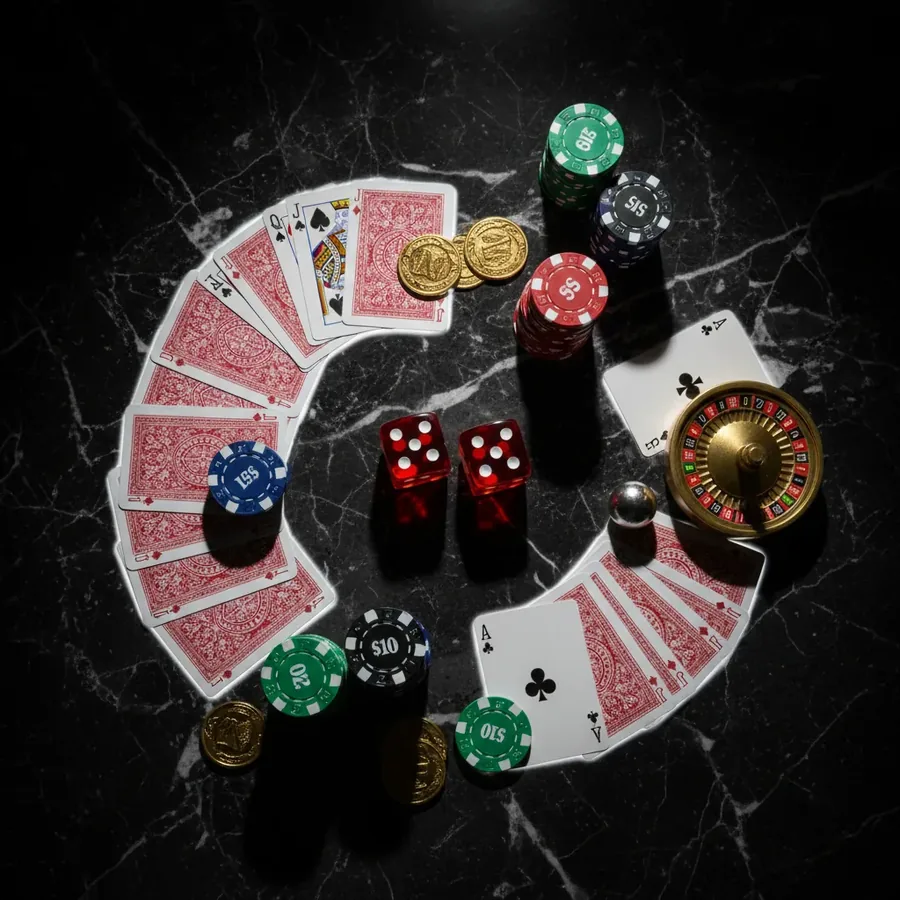
Read Statistics of Last 500 Rounds Correctly
Video Poker Jacks or Better 9/6 features a standard deviation of 4.42, indicating high volatility where results fluctuate significantly from the mean over short sessions. A sample of 500 rounds may deviate widely from the 99.54 percent RTP due to this inherent variance in hand frequencies and payouts.
Sic Bo Spezielle Einsätze show a much lower standard deviation of approximately 2.64 for Tie bets, yet they carry a house edge of 14.36 percent. Players tracking recent rounds must understand that low volatility does not equate to positive expected value in these high-edge scenarios.
Blackjack Liberal Vegas Strip exhibits a standard deviation of 1.15, reflecting the stabilizing effect of liberal rules like late surrender and resplitting. Tracking 500 hands here provides a more accurate reflection of the 99.72 percent RTP compared to high-variance video poker variants.
Multihand Blackjack with Up to 5 Hands
Blackjack 6 Decks allows doubling after split, which increases the frequency of optimal strategic plays across multiple simultaneous hands. This rule reduces the house edge to 0.46 percent when using basic strategy, provided the dealer stands on soft 17.
Playing five hands simultaneously multiplies the hourly action and potential loss rate, though the mathematical expectation per hand remains unchanged at -0.46 percent. Players must manage their bankroll carefully as the total exposure is five times that of a single-hand game.
Insurance bets are strictly discouraged by basic strategy unless the true count exceeds +3, regardless of the number of hands played. Taking insurance on any of the five hands reduces the overall RTP to 92.53 percent, creating a significant negative expectation shift.
Four Blackjack Hand Decisions at a Glance
Hit decisions in 6-deck Blackjack depend heavily on whether the dealer stands on soft 17 or hits it, altering the optimal strategy for marginal hands. The DAS rule permits doubling on any two cards, expanding the range of profitable doubling opportunities compared to restricted variations.
Stand decisions are governed by the dealer's upcard and the player's hard total, with no surrender option available in this specific configuration. The absence of surrender means players must endure losing hands that could have been mitigated by halving the loss in other variants.
Split pairs allow re-splitting Aces in some contexts, but doubling after split is explicitly permitted here to maximize edge reduction. This flexibility is crucial for maintaining the 99.54 percent RTP, as failing to double on favorable splits increases the house advantage significantly.
Fold or push outcomes occur rarely in standard play, but Casino Hold'em Ante bets push if the dealer holds a pair below four. Understanding these distinct decision trees ensures players do not apply incorrect strategies across different table game formats.
Keno and Bingo with RTP Between 92 and 95
Roulette Französisch inner bets yield an RTP of 97.30 percent because La Partage does not apply to inside wagers like Straights or Splits. This exclusion keeps the house edge at 2.70 percent, matching the European wheel rather than offering the improved odds of French outside bets.
Sic Bo Specific Double bets carry a house edge of 18.52 percent, resulting in an RTP of only 81.48 percent. This places it well below the 92 to 95 percent range mentioned in the heading, highlighting the danger of special bets in dice games.
Blackjack Insurance presents an RTP of 92.53 percent, which falls within the lower bound of the specified range but represents a poor side bet. Relying on such side options drags down the overall session performance compared to sticking to the main game mechanics.
Game categories at a glance
| Category | Examples | Stakes From | Highlight |
|---|---|---|---|
| Slots | Jammin' Jars, Sun of Egypt 3, Gates of Olympus | 0,10 EUR | thousands of titles |
| Table games | Roulette, Blackjack, Baccarat | 0,50 EUR | classic rules |
| Live casino | Crazy Time, Quantum Blackjack Plus Live | 0,20 EUR | real dealers |
| Jackpot games | Mega Moolah, Divine Fortune, Age of the Gods | 0,20 EUR | progressive pools |
| Instant games | Aviator, Plinko, Mines | 0,10 EUR | fast rounds |
| Video poker | Jacks or Better, Deuces Wild | 0,25 EUR | strategy based |
100 EUR bet, 50 rounds: the expected value
The European Roulette variant offers a consistent House Edge of 2.70 percent across all wager types, including Straight bets paying 35:1 and Dozen bets returning 2:1 on a wheel with thirty-seven sectors. This mathematical constant ensures that every spin maintains the same theoretical retention rate regardless of the specific placement strategy employed by the player during gameplay.
When comparing this to Blackjack Liberal Vegas Strip, which provides a superior RTP of 99.72 percent and a minimal House Edge of just 0.28 percent using liberal rules like S17 and Late Surrender, the difference in long-term profitability becomes starkly evident for informed gamblers. The lower edge in blackjack significantly reduces the casino's advantage compared to standard table games.
A single 100 EUR bet over fifty rounds on European Roulette results in an expected loss calculated at 2.70 percent of the total volume, equating to approximately 2.70 EUR lost per hundred units wagered due to the inherent mathematical disadvantage built into the game structure. This predictable erosion of bankroll highlights the importance of selecting games with more favorable odds when available.
Game Shows: sectors, multipliers, and bet ranges
Sic Bo Special Bets present a wide variance in return rates, ranging from an RTP of 81.48 percent up to 92.13 percent depending on the specific wager type chosen by the participant. Single Number bets offer the best value among special wagers with a House Edge of only 7.87 percent, while Specific Double bets carry a significantly higher edge of 18.52 percent.
The payout structure for these dice games includes Specific Triple pays 180:1, Any Triple pays 30:1, and Single Number returns vary between 1:1 and 3:1 based on the number of matching dice outcomes achieved during the roll sequence. These multipliers directly influence the volatility and potential reward magnitude associated with each distinct betting option available in the game interface.
Analyzing the risk-reward profile reveals that Two-Dice Combo bets carry a House Edge of 16.67 percent and pay 5:1, making them considerably less favorable than Single Number options which maintain a much lower house advantage of 7.87 percent. Players should carefully evaluate these percentages before committing funds to high-edge side bets within the Sic Bo framework.
American Roulette: 5.26 Percent Due to Double Zero
The American Roulette wheel introduces a double zero sector alongside the standard thirty-six numbers, creating a total of thirty-eight pockets that significantly increase the casino's mathematical advantage over players compared to European variants with only one zero pocket. This structural difference fundamentally alters the probability distribution for all standard outside and inside bets placed on the felt.
The Five Number Bet covering zeros and one through three carries a steep House Edge of 7.89 percent and pays 6:1, representing the worst possible wager on any roulette table due to its disproportionately high cost relative to the actual odds of winning the combination. No equivalent bet exists on European wheels, making this trap unique to American formats.
Standard straight-up bets on American Roulette still yield a House Edge of 5.26 percent because payouts remain fixed at 35:1 despite the increased number of losing sectors reducing the true probability of success from eighteen in thirty-seven to eighteen in thirty-eight. This persistent disadvantage makes avoiding the Five Number Bet crucial for minimizing losses.
Before Double Down: read the open dealer card
Blackjack 6 Decks features liberal rules including Dealer Standing on Soft 17, Double After Split allowed, and Double on Any first two cards, contributing to a solid RTP of 99.54 percent when players adhere strictly to optimal basic strategy throughout every hand dealt. These specific rule variations collectively reduce the house edge to a low 0.46 percent for skilled participants.
Insurance is a separate side bet offered when the dealer shows an Ace, paying 2:1 but carrying a substantial House Edge of 7.47 percent, meaning basic strategy always dictates rejecting this wager unless counting cards yields a true count greater than or equal to plus three. Accepting insurance without card counting guarantees negative expected value over time due to the unfavorable odds provided by the casino.
The base game allows doubling on any initial two-card combination and permits splitting pairs multiple times, yet forbids surrender options which would otherwise further improve player expectations. Maintaining discipline to follow the prescribed basic strategy for these specific rule sets ensures the theoretical return remains at the advertised ninety-nine point five four percent level.
Table Games Often Count Only 10 Percent
Table Games contribute merely ten percent toward fulfilling the wagering requirement attached to the three hundred percent welcome bonus capped at two thousand euros, whereas Slots contribute fully at one hundred percent to the same turnover obligation. This significant disparity means playing blackjack or roulette requires ten times the betting volume compared to slot machines to clear the bonus conditions successfully.
Blackjack Liberal Vegas Strip with its nine-nine point seven two percent RTP generates very little bonus money turnover relative to the stake size because the low house edge limits the amount retained by the operator during play. Consequently, clearing a two thousand euro bonus via blackjack demands substantially larger aggregate betting volumes than high-house-edge games would require.
Video Poker Jacks or Better 9/6 Full Pay offers a ninety-nine point five four percent return but also falls under the ten percent contribution category for table game bonuses, forcing players to wager heavily to meet requirements. The combination of low contribution rates and high game RTPs creates a difficult path for converting bonus funds into withdrawable cash efficiently.
Dozen 2:1: Twelve Numbers, One Third Coverage
The Dozen bet covers twelve numbers on the roulette layout with a payout of 2:1. This wager offers one-third coverage of the wheel sectors, providing a high hit frequency compared to straight-up bets. Players receive two units for every one unit staked when any number from 1 to 12, 13 to 24, or 25 to 36 hits. The risk remains constant across all dozen options due to the identical house edge structure.
European Roulette applies a 2.70% house edge to this specific market, resulting in an RTP of 97.30%. French Roulette maintains the same mathematical profile for inside bets unless La Partage rules apply, which are excluded here. The American variant introduces a higher 5.26% edge on most bets, though the Dozen bet itself is not the primary trap; the Five Number Bet holds that distinction. Comparing the two European styles reveals no difference in payout odds for this specific wager type.
This bet contributes only 10% toward the bonus wagering requirement at Spinwinera, unlike slots which count fully. A player depositing €100 and claiming the 300% bonus receives €300, requiring significant turnover through table games. With a 10% contribution rate, €100 wagered on dozens counts as only €10 toward the target. This slow progress makes pure table game strategies inefficient for clearing the promotion quickly.
RNG Roulette vs. Live Table: Four Clear Differences
Random Number Generators (RNG) determine outcomes instantly without physical dealers or equipment. This digital format ensures faster game cycles and lower operational costs for the provider. Live dealer tables use real cards and wheels streamed from studios, introducing human variability. The RNG version eliminates shuffling delays and physical handling errors inherent in live formats.
The house edge for American Roulette RNG stands at 7.89%, driven by the double zero pocket. Live dealer versions often mirror these rules but may offer side bets with different volatility profiles. European RNG tables maintain a 2.70% edge, consistent with their live counterparts. The mathematical variance remains identical between digital and live versions if the rules match exactly.
Baccarat Player bets carry a 1.24% house edge in eight-deck configurations, available in both formats. Video Poker Deuces Wild offers a much lower 0.27% edge, highlighting the superiority of card games over roulette for optimal play. Blackjack Insurance acts as a separate side bet with a 7.47% edge, often tempting players away from basic strategy. Understanding these distinctions helps players choose games with favorable return-to-player percentages.
Three Roulette Variants, Three House Edges Compared
American Roulette features 38 sectors including 0 and 00, creating a 7.89% house edge on most bets. The Five Number Bet is the worst option at 7.89%, covering five pockets for a 6:1 payout. European Roulette reduces this to 37 sectors with a single zero, lowering the edge to 2.70%. French Roulette shares the same wheel but adds La Partage rules for even-money bets, further reducing the edge to 1.35% in those cases.
The Straight bet pays 35:1 in all variants, but the probability of winning differs significantly. In American Roulette, the chance is 1/38, while European and French versions offer 1/37. This discrepancy directly impacts the long-term return, making European and French wheels statistically superior. Players seeking better odds should avoid American tables entirely due to the inflated house advantage.
Bonus wagering requirements penalize table game play more heavily than slot games at Spinwinera. The 300% welcome bonus up to €2,000 requires substantial turnover to withdraw winnings. Since roulette contributes only 10% to wagering, players must bet ten times more than slot users. This structural disadvantage makes it difficult to clear bonuses using purely low-edge roulette strategies.
Submit documents no older than three months
KYC verification requires valid identification documents issued within the last three months. This rule ensures the authenticity of the player's identity and age before processing withdrawals. Acceptable forms typically include passports, national ID cards, or driver's licenses. Expired documents are rejected automatically, causing delays in account activation and fund access.
Proof of address is another critical component, often requiring a utility bill or bank statement dated recently. These documents confirm the residential address matches the registration details. Failure to provide current paperwork results in suspended withdrawal privileges until compliance is achieved. The three-month limit prevents the use of outdated information that might no longer be accurate.
Spinwinera enforces strict adherence to these deadlines to comply with anti-money laundering regulations. Players attempting to bypass this step face permanent account restrictions or forfeiture of funds. The process is mandatory for all users regardless of deposit amount or game preference. Timely submission avoids unnecessary interruptions during the gaming session or cashout phase.
37 vs. 38 Sectors: One Zero Difference
European Roulette uses a wheel with 37 sectors, including a single zero pocket. This configuration yields a house edge of 2.70% on standard outside bets like Red/Black. The extra zero increases the casino's advantage compared to a hypothetical 36-number wheel. Players betting on dozens or columns face the same 2.70% margin regardless of the chosen sector.
American Roulette expands the wheel to 38 sectors by adding a double zero pocket. This additional pocket raises the house edge to 5.26% on most wagers, nearly doubling the European cost. The Five Number Bet (0, 00, 1, 2, 3) suffers an even higher 7.89% edge. This makes American tables significantly less favorable for long-term play compared to European alternatives.
The difference in sector count directly impacts the Expected Value of each spin. For every €100 wagered on Red/Black in Europe, the player loses €2.70 on average. In America, the same bet results in a €5.26 loss per hundred euros staked. This mathematical disparity explains why informed gamblers prefer European or French wheels over American ones.
Contact
Live - online chat
Banking









Providers












Spinwinera Casino 2026